Introduction to Cultural Anthropology
Sociocultural anthropology investigates people’s experiences, actions and social relations to learn how societies give them meaning. It also focuses on social patterns and how both patterns and meanings change as people face historical, political, and economic shifts. This course traces how sociocultural inquiries have made evident how people develop ways to make sense of the world around them, and worlds beyond theirs. We examine cultural and social entities such as kinship, gender, religion, and economic and political organizations and relations to examine how such entities come to be and how people accept or oppose them. A key question we revisit to is how an anthropological perspective enables us to understand cultural differences in an interconnected world.
Medical Anthropology
Medical anthropology examines human health and healing systems across societies. Different groups have different beliefs and practices related to health, illness, and healing, beliefs and practices that may be reflected in or in tension with dominant medical systems. In this course, we engage with readings and audiovisual materials that point to the importance of understanding health, illness, and healing from multiple perspectives. We will gain theoretical perspectives as we learn from scholars who have belief systems and practices around the world. We will also examine understandings of health, illness, and healing as social practices, exploring how we relate to others through our experiences and perceptions of what being ill or well means. Finally, an essential and exciting objective of this course is to grasp how health and illness are co-constitutive of other social relations, including economic, religious, gendered, racialized, and colonial relations. In doing so we will deepen our collective understanding of how health and illness categories and medical practices are important elements of uneven power relations in Canada and worldwide.
Ethnographic Methods
This course critically examines ethnography as a method for qualitative research. The first part of the class is devoted to developing an understanding of core elements and practices of the ethnographic process, from participant observation to note-taking techniques. We will practice “technical” elements with reading and writing ethnography to better understand the connection between ethnographic fieldwork and ethnography as a genre writing. The second part of the class is dedicated to reading, listening, and viewing ethnography in different multimodal forms, including written accounts (e.g., journal articles, book chapters), and visual and digital forms (e.g., ethnographic films, podcasts). In engaging with different ethnographic forms, we will learn to identify the key theoretical arguments and object(s) of study, reflect on intended audiences, and practice generative critique. Throughout the course, we will examine how anthropology continues to grapple with its foundations from its past (for instance, its participation in colonial projects and its predominant male-centered perspectives), and what the discipline and ethnographic practice have to offer to the contemporary world and its peoples.
From Factory to Gig: A World of Workers
In this course, we will embrace a broad understanding of work and workers, including people who sell their labour for wages and people who do “flexible” work as part of gig economies and self-employment. We will examine work as an economic activity that people undertake, but that is embedded in various social contexts and relations. Why do we work? What is “class,” and who belongs to it? Who defines work as “formal” or “informal,” and what do these classifications mean for workers? How do dynamics of gender, racialization, and il/legality impact people’s opportunities for work and experiences as workers? We will pay close attention to power relations at local and global scales that shape how work, workers and wages are defined. We will examine work and workers in the capitalist regime. For instance, we will study the local and global forces that “make” work move to places where labour is cheaper and more “flexible.” We will consider the challenges that differently situated workers face when production and other work sources move from one site to another. Finally, we will consider how workers have organized and envisioned new ways to build alliances to achieve socio-economic equality. By doing so, we will reimagine the future of work and our futures as workers.
Gifts and Commodities
This course will examine the political and culturally embedded nature of economies by undertaking a comparative analysis of production, distribution and consumption in small-scale and complex societies. There will be a focus on the effects of global capitalism upon local economic systems.
Anthropological Imaginings of Latin America
This course is a selective survey of the ethnographic imaginings and representations of Latin America that have shaped anthropological knowledge, theory and methods. Topics may include post-colonialism, ethnography of violence, gendered identities and sexualities, religious expression, popular culture, and globalization.
open learning
Colombia in the 19th Century
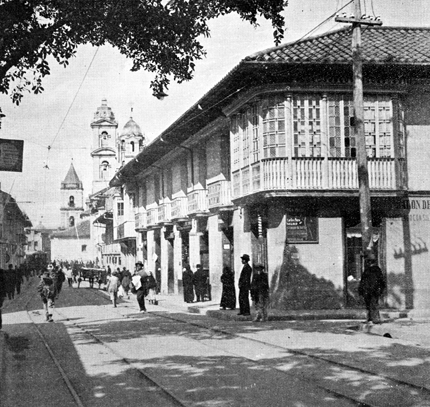
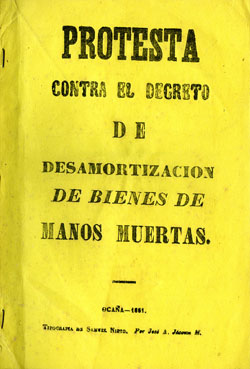
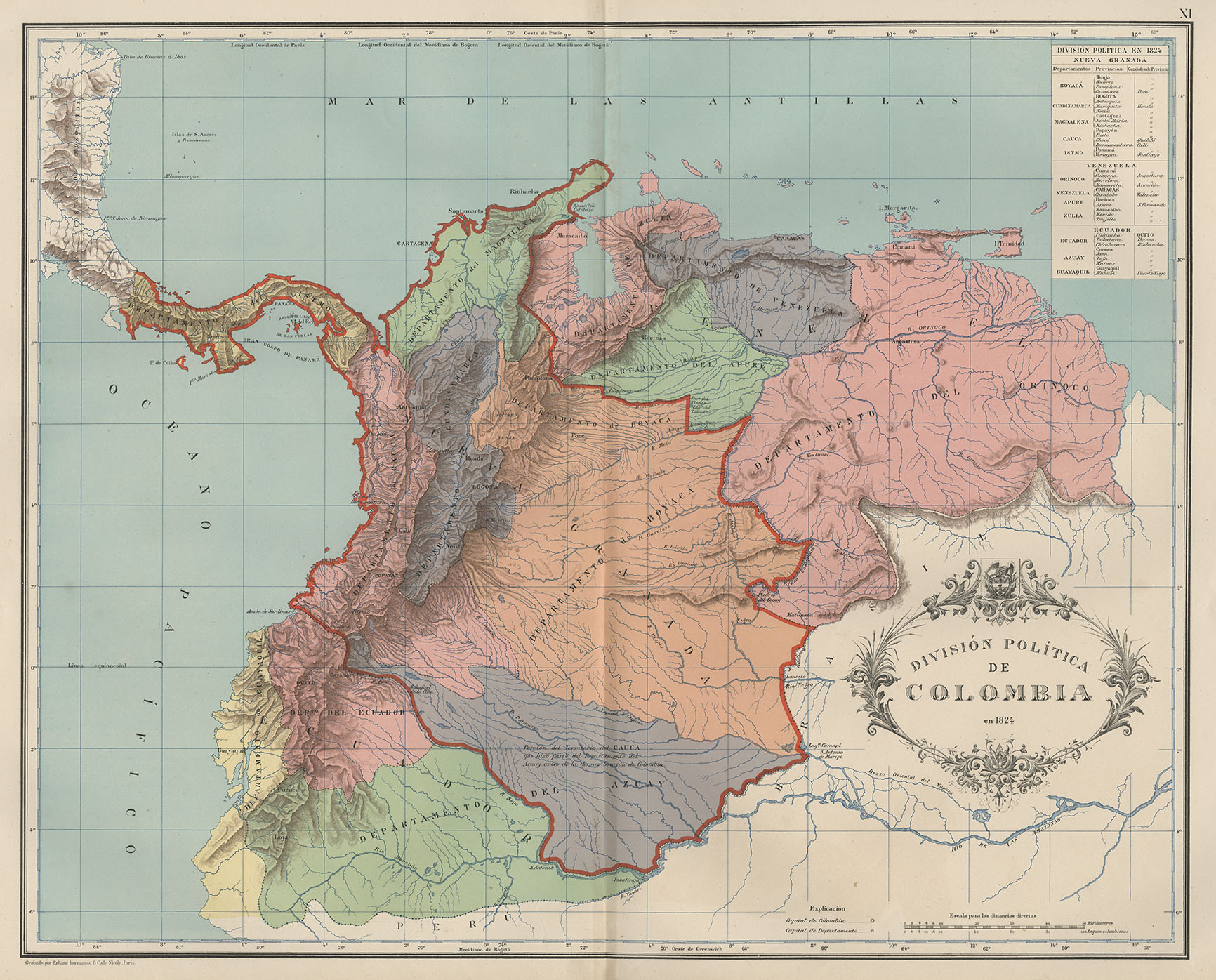
The J. León Helguera Collection of Colombiana at the Vanderbilt University Library includes pamphlets from 19th-century Colombia. Through the Vanderbilt Libraries’ Dean’s Fellow program a selection of three hundred pamphlets have been digitized from the over two thousand that form part of the collection. This online exhibit complements the Helguera Collection by offering a set of short essays with links to selected documents that introduce the reader to the central problems that Colombia faced in the 19th century: a weak economy, lack of education, conflicts between state and religion, and poor transportation. Many of these issues are echoed in the current economic, political and social situation of the country. The selected pamphlets and other relevant documents are also fully searchable in the Helguera database. http://exhibits.library.vanderbilt.edu/colombia19c/essays.php?topic=introduction
contact | contacto: gperezrivera@mtroyal.ca
© Copyright 2026 Gloria C. Pérez-Rivera
 Gloria C. Pérez-Rivera, MD PhD